

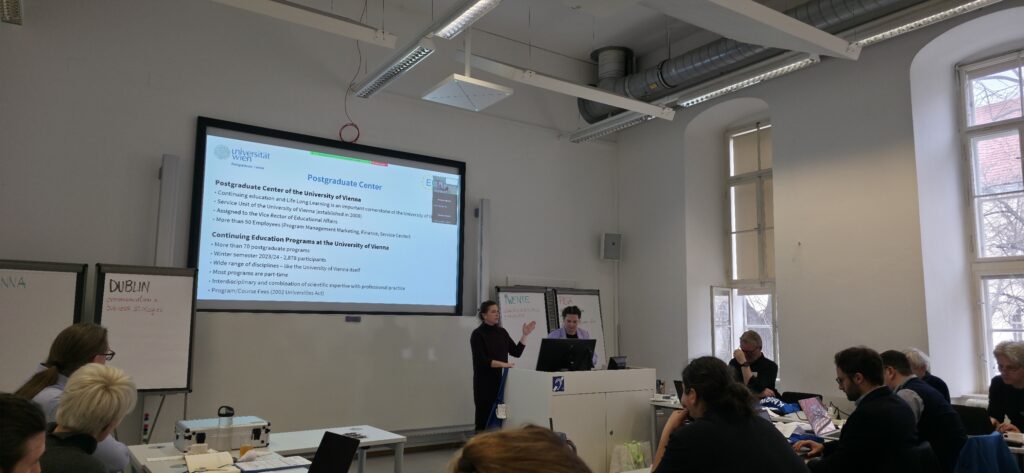
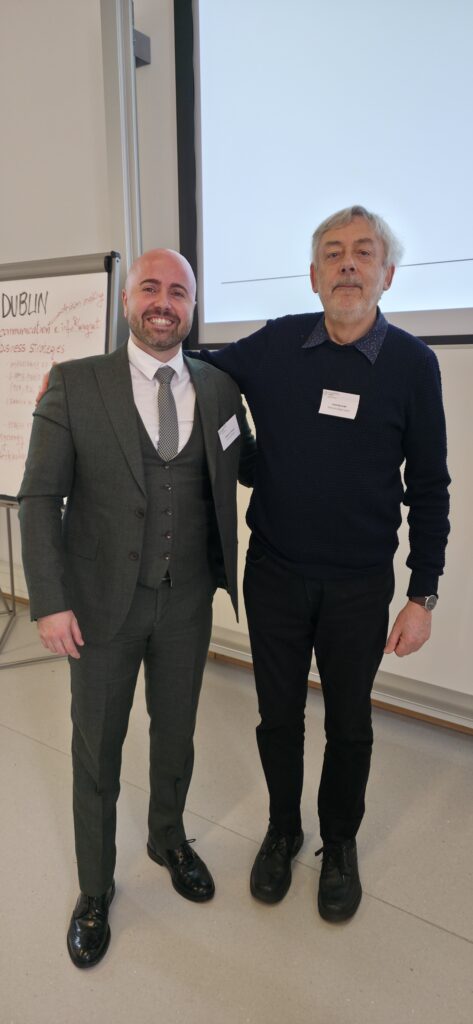
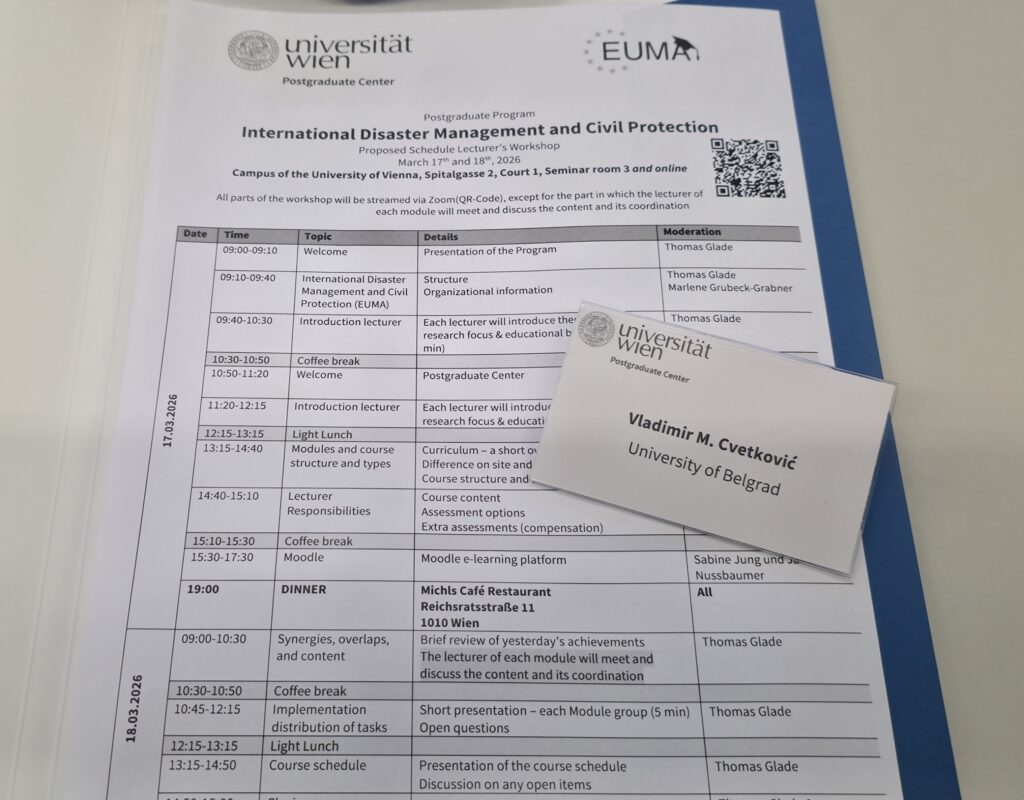
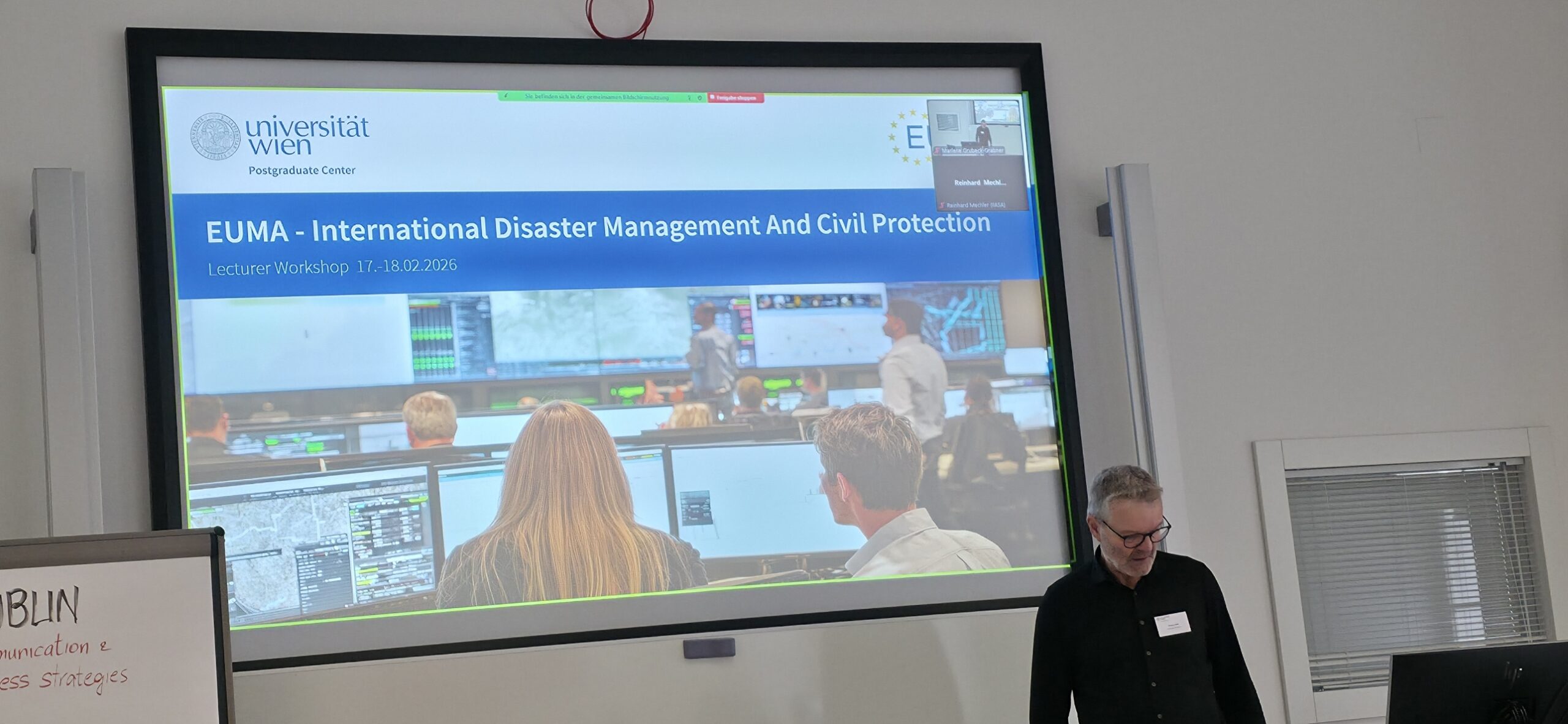
It is a great honor and a particular pleasure for me to be engaged as a professor in the new international master’s program International Disaster Management and Civil Protection at the University of Vienna, one of the oldest and most distinguished university institutions in Europe, founded in 1365.
This is an exceptionally important and modernly designed program that connects the academic community, operational teams, and decision-makers, with the aim of strengthening knowledge, competencies, and cooperation in the fields of disaster management, risk reduction, and civil protection. The program is structured in two formats, thereby addressing different professional and academic needs of participants.
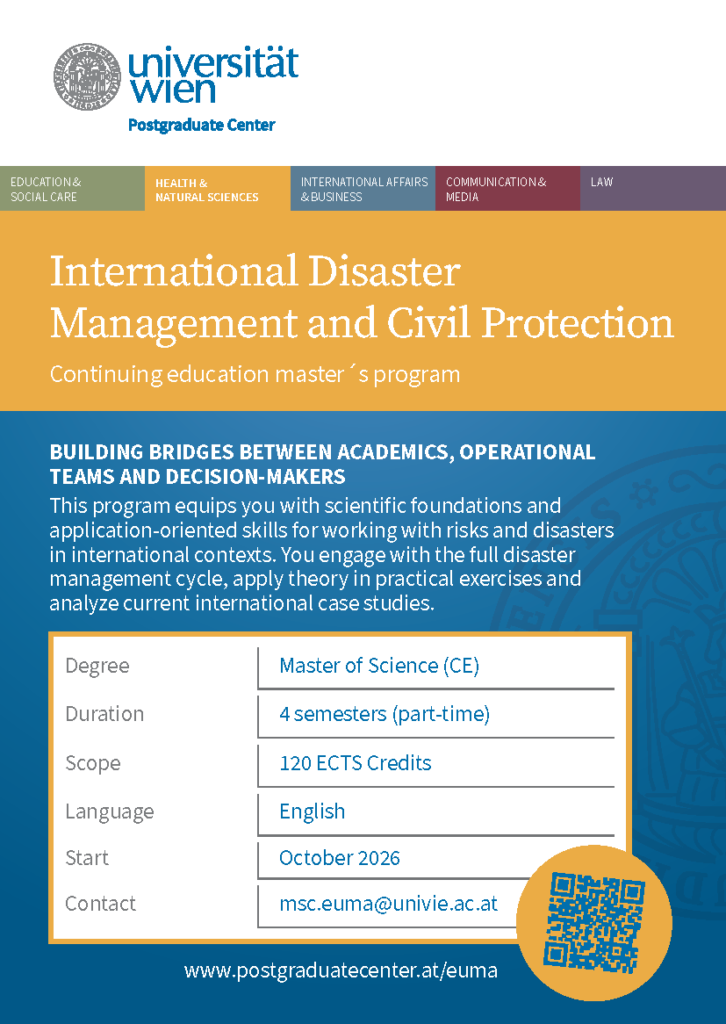
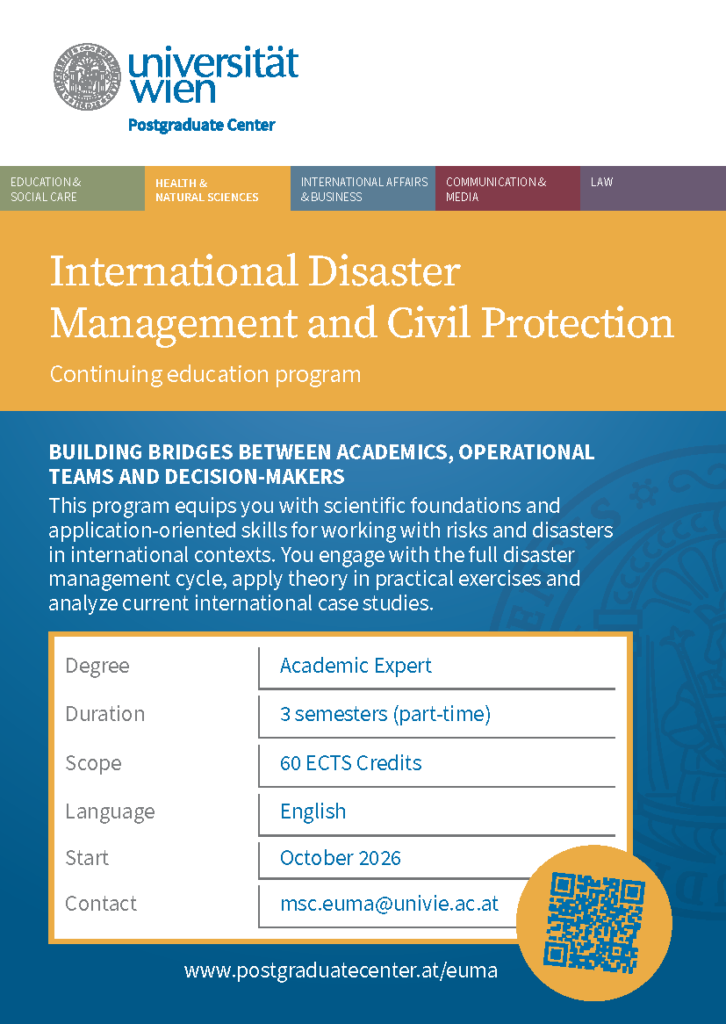
The Master’s Program comprises 120 ECTS credits, lasts four semesters, and leads to the academic degree of Master of Science, including the completion of a master’s thesis, which further strengthens the candidate’s research and academic profile. In addition, the program is also offered through the Academic Expert Program, which comprises 60 ECTS credits, lasts three semesters, and is primarily focused on the development of practical and professional competencies in the field of international disaster management, risk management, and civil protection. Such a program structure enables professionals from different sectors to choose, in accordance with their goals and level of engagement, the pathway that best supports their further professional and academic development.
The special value of this program lies in its distinctly international and interdisciplinary character. Teaching is delivered in English through a combination of on-site blocks at partner universities in several European countries and online units, enabling students not only to acquire high-quality theoretical knowledge, but also to develop practical skills through the analysis of current case studies, simulations, field insights, and intensive networking with experts from different countries and sectors. The program covers the entire disaster management cycle — from prevention and preparedness, through response, to recovery and resilience building.
It is particularly important to emphasize that the program is implemented in cooperation with renowned European universities, including the University of Vienna, University of Twente, Sant’Anna School of Advanced Studies Pisa, University of Bonn, and Dublin City University, thus providing students with a unique opportunity to become familiar with different institutional models, national systems, and examples of good practice in disaster management and civil protection across Europe. The program was developed on the basis of the results of the European project EUMA – Creating a European Higher Education Network for Master’s Programs in Disaster Risk Management, funded with the support of the European Union.
I am especially pleased that its Academic Director is Prof. Dr. Thomas Glade, who coordinated the entire consortium and made a strong contribution to the development of this innovative curriculum. I am also very pleased to have had the opportunity to collaborate with Marlene Grubeck-Grabner and other colleagues involved in the development and implementation of this important international program. An additional value of this engagement lies in the fact that I had the opportunity to be in the company of one of the world’s most distinguished experts in this field — Professor David Alexander, Emeritus Professor of Emergency Planning and Management at University College London (UCL), whose scholarly and professional contribution to the development of contemporary disaster studies and emergency management is of outstanding significance at the global level.
For me, this engagement represents not only a great professional recognition, but also an important opportunity to contribute to the further integration of science, education, and practice in the field of disaster risk management at the international level. I believe that this program will make a strong contribution to educating new generations of professionals capable of responding to the complex challenges of the contemporary European and global security environment.

Prof. Dr. Vladimir M. Cvetković is recognized as a leading expert in Disaster Risk Management, with a focus on Risk Reduction, Preparedness, Response, and Recovery. He has authored over 300 scientific papers published in domestic and international journals and proceedings, as well as 30 books.