Close Menu
Scientific-Professional Society for Disasaster Risk ManagementScientific-Professional Society for Disasaster Risk Management
    Facebook X (Twitter) Instagram
    Facebook X (Twitter) Instagram YouTube LinkedIn TikTok
    Scientific-Professional Society for Disasaster Risk ManagementScientific-Professional Society for Disasaster Risk Management
    Contact
    • About
      • History
      • President
      • Members
      • Secretary
      • Documentation
        • Statute
        • Communication Strategy
        • Work Information Booklet
        • Seminar Programs
        • Training Programs
        • Regulations on Identification Cards, Badges, and Uniforms
        • Cooperation Agreements
        • Organization Flyer
        • Membership Application Form
      • Membership
      • Contact SPS-DRM
    • Publication
      • Books
        • Monographs
        • Practicums
      • Collection of papers
      • Scientific papers
      • Broschure
      • Flyers and Posters
      • International journal (IJDRM)
    • Journal
    • ProSafeNet
    • Science
      • IDR
      • Research results
        • National research
          • Academic papers
          • Reports and analysis
      • International research
        • Academic papers
        • Reports and analysis
      • Projects
        • International projects
        • National projects
    • Education
      • Training
        • Training Program
        • Completed training
        • Announced Trainings
      • Seminars
        • Seminar Programs and Agendas
        • Participant Registration
        • Speaker Registration
      • Conference
        • International conference
      • Disaster Management Courses
      • Disaster Database
        • International Disaster Database
        • National Disaster Database
      • Articles
      • Case Studies
      • Presentations
      • Disaster statistics
      • Blog about disaster
    • Information
      • News from SPS-DRM
      • Announcements
      • Video
      • Donations and Sponsorships
    Scientific-Professional Society for Disasaster Risk ManagementScientific-Professional Society for Disasaster Risk Management
    Home»News»International Journal of Disaster Risk Management (IJDRM), Vol. 7, No. 2, features 31 published scientific papers
    News

    International Journal of Disaster Risk Management (IJDRM), Vol. 7, No. 2, features 31 published scientific papers

    EditorBy EditorDecember 28, 2025No Comments3 Mins Read
    Facebook Twitter LinkedIn Telegram Pinterest Tumblr Reddit WhatsApp Email
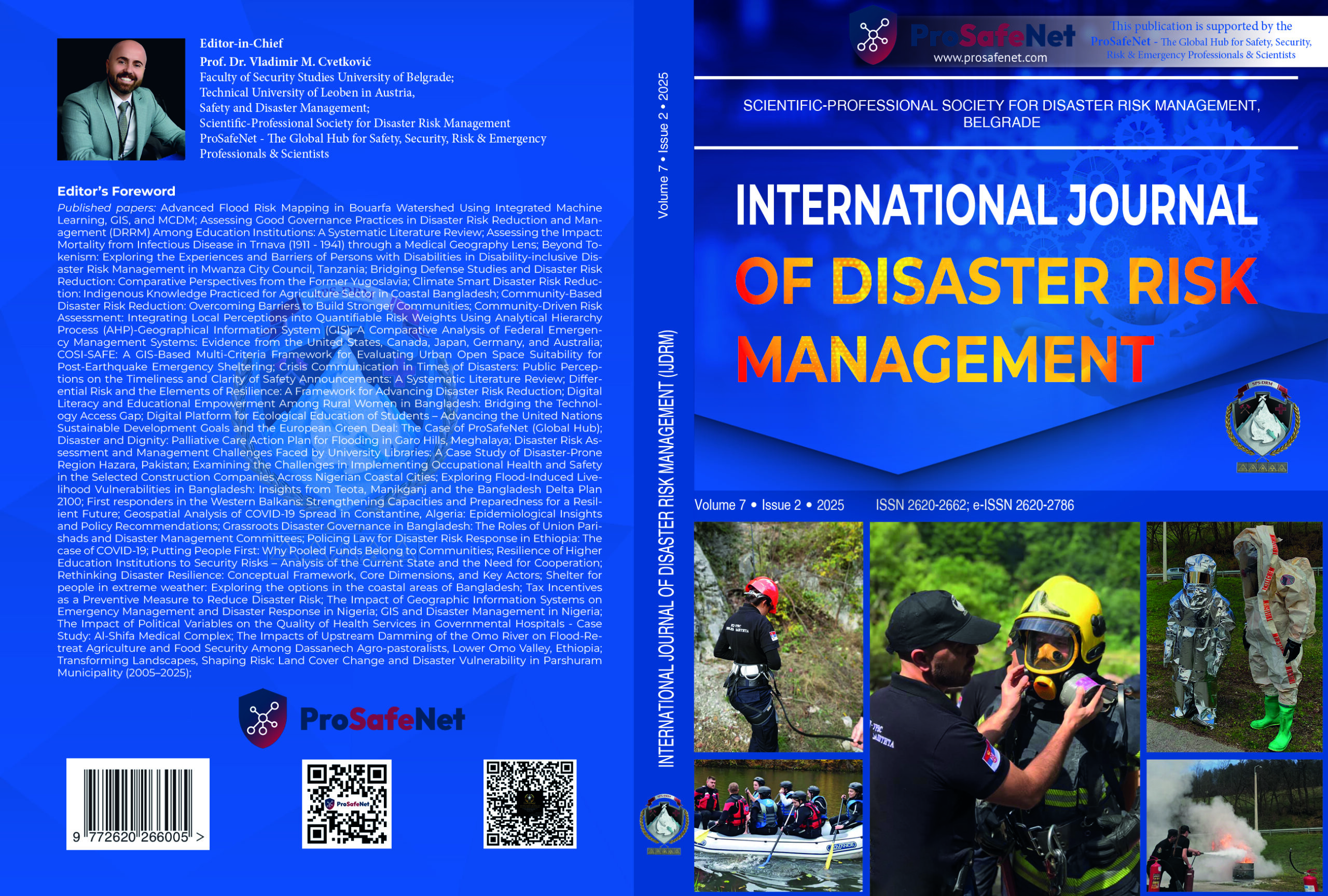
    I am pleased to share that, as Editor-in-Chief, the latest issue of the International Journal of Disaster Risk Management (IJDRM) features 31 published scientific papers and brings together authors from 21 countries: United States, United Kingdom, Austria, Spain, Serbia, North Macedonia, Algeria, Morocco, Ethiopia, Tanzania, Kenya, Nigeria, Palestine, Pakistan, Iran, India, Nepal, Bangladesh, Brunei Darussalam, Thailand, and the Philippines. This diversity of perspectives and contexts strengthens the journal’s mission to advance rigorous, internationally relevant research and practical insights for disaster risk reduction and resilience. Published papers: Advanced Flood Risk Mapping in Bouarfa Watershed Using Integrated Machine Learning, GIS, and MCDM. Assessing Good Governance Practices in Disaster Risk Reduction and Management (DRRM) Among Education Institutions: A Systematic Literature Review. Assessing the Impact: Mortality from Infectious Disease in Trnava (1911–1941) through a Medical Geography Lens. Beyond Tokenism: Exploring the Experiences and Barriers of Persons with Disabilities in Disability-inclusive Disaster Risk Management in Mwanza City Council, Tanzania. Bridging Defense Studies and Disaster Risk Reduction: Comparative Perspectives from the Former Yugoslavia. Climate Smart Disaster Risk Reduction: Indigenous Knowledge Practiced for Agriculture Sector in Coastal Bangladesh. Community-Based Disaster Risk Reduction: Overcoming Barriers to Build Stronger Communities. Community-Driven Risk Assessment: Integrating Local Perceptions into Quantifiable Risk Weights Using Analytical Hierarchy Process (AHP)-Geographical Information System (GIS). A Comparative Analysis of Federal Emergency Management Systems: Evidence from the United States, Canada, Japan, Germany, and Australia. COSI-SAFE: A GIS-Based Multi-Criteria Framework for Evaluating Urban Open Space Suitability for Post-Earthquake Emergency Sheltering. Crisis Communication in Times of Disasters: Public Perceptions on the Timeliness and Clarity of Safety Announcements: A Systematic Literature Review. Differential Risk and the Elements of Resilience: A Framework for Advancing Disaster Risk Reduction. Digital Literacy and Educational Empowerment Among Rural Women in Bangladesh: Bridging the Technology Access Gap. Digital Platform for Ecological Education of Students – Advancing the United Nations Sustainable Development Goals and the European Green Deal: The Case of ProSafeNet (Global Hub). Disaster and Dignity: Palliative Care Action Plan for Flooding in Garo Hills, Meghalaya. Disaster Risk Assessment and Management Challenges Faced by University Libraries: A Case Study of Disaster-Prone Region Hazara, Pakistan. Examining the Challenges in Implementing Occupational Health and Safety in the Selected Construction Companies Across Nigerian Coastal Cities. Exploring Flood-Induced Livelihood Vulnerabilities in Bangladesh: Insights from Teota, Manikganj and the Bangladesh Delta Plan 2100. First Responders in the Western Balkans: Strengthening Capacities and Preparedness for a Resilient Future. Geospatial Analysis of COVID-19 Spread in Constantine, Algeria: Epidemiological Insights and Policy Recommendations. Grassroots Disaster Governance in Bangladesh: The Roles of Union Parishads and Disaster Management Committees. Policing Law for Disaster Risk Response in Ethiopia: The Case of COVID-19. Putting People First: Why Pooled Funds Belong to Communities. Resilience of Higher Education Institutions to Security Risks – Analysis of the Current State and the Need for Cooperation. Rethinking Disaster Resilience: Conceptual Framework, Core Dimensions, and Key Actors. Shelter for People in Extreme Weather: Exploring the Options in the Coastal Areas of Bangladesh. Tax Incentives as a Preventive Measure to Reduce Disaster Risk. The Impact of Geographic Information Systems on Emergency Management and Disaster Response in Nigeria. The Impact of Political Variables on the Quality of Health Services in Governmental Hospitals - Case Study: Al-Shifa Medical Complex. The Impacts of Upstream Damming of the Omo River on Flood-Retreat Agriculture and Food Security Among Dassanech Agro-pastoralists, Lower Omo Valley, Ethiopia. Transforming Landscapes, Shaping Risk: Land Cover Change and Disaster Vulnerability in Parshuram Municipality (2005–2025). I am pleased to share that, as Editor-in-Chief, the latest issue of the International Journal of Disaster Risk Management (IJDRM) features 31 published scientific papers and brings together authors from 21 countries: United States, United Kingdom, Austria, Spain, Serbia, North Macedonia, Algeria, Morocco, Ethiopia, Tanzania, Kenya, Nigeria, Palestine, Pakistan, Iran, India, Nepal, Bangladesh, Brunei Darussalam, Thailand, and the Philippines. This diversity of perspectives and contexts strengthens the journal’s mission to advance rigorous, internationally relevant research and practical insights for disaster risk reduction and resilience. Published papers: Advanced Flood Risk Mapping in Bouarfa Watershed Using Integrated Machine Learning, GIS, and MCDM. Assessing Good Governance Practices in Disaster Risk Reduction and Management (DRRM) Among Education Institutions: A Systematic Literature Review. Assessing the Impact: Mortality from Infectious Disease in Trnava (1911–1941) through a Medical Geography Lens. Beyond Tokenism: Exploring the Experiences and Barriers of Persons with Disabilities in Disability-inclusive Disaster Risk Management in Mwanza City Council, Tanzania. Bridging Defense Studies and Disaster Risk Reduction: Comparative Perspectives from the Former Yugoslavia. Climate Smart Disaster Risk Reduction: Indigenous Knowledge Practiced for Agriculture Sector in Coastal Bangladesh. Community-Based Disaster Risk Reduction: Overcoming Barriers to Build Stronger Communities. Community-Driven Risk Assessment: Integrating Local Perceptions into Quantifiable Risk Weights Using Analytical Hierarchy Process (AHP)-Geographical Information System (GIS). A Comparative Analysis of Federal Emergency Management Systems: Evidence from the United States, Canada, Japan, Germany, and Australia. COSI-SAFE: A GIS-Based Multi-Criteria Framework for Evaluating Urban Open Space Suitability for Post-Earthquake Emergency Sheltering. Crisis Communication in Times of Disasters: Public Perceptions on the Timeliness and Clarity of Safety Announcements: A Systematic Literature Review. Differential Risk and the Elements of Resilience: A Framework for Advancing Disaster Risk Reduction. Digital Literacy and Educational Empowerment Among Rural Women in Bangladesh: Bridging the Technology Access Gap. Digital Platform for Ecological Education of Students – Advancing the United Nations Sustainable Development Goals and the European Green Deal: The Case of ProSafeNet (Global Hub). Disaster and Dignity: Palliative Care Action Plan for Flooding in Garo Hills, Meghalaya. Disaster Risk Assessment and Management Challenges Faced by University Libraries: A Case Study of Disaster-Prone Region Hazara, Pakistan. Examining the Challenges in Implementing Occupational Health and Safety in the Selected Construction Companies Across Nigerian Coastal Cities. Exploring Flood-Induced Livelihood Vulnerabilities in Bangladesh: Insights from Teota, Manikganj and the Bangladesh Delta Plan 2100. First Responders in the Western Balkans: Strengthening Capacities and Preparedness for a Resilient Future. Geospatial Analysis of COVID-19 Spread in Constantine, Algeria: Epidemiological Insights and Policy Recommendations. Grassroots Disaster Governance in Bangladesh: The Roles of Union Parishads and Disaster Management Committees. Policing Law for Disaster Risk Response in Ethiopia: The Case of COVID-19. Putting People First: Why Pooled Funds Belong to Communities. Resilience of Higher Education Institutions to Security Risks – Analysis of the Current State and the Need for Cooperation. Rethinking Disaster Resilience: Conceptual Framework, Core Dimensions, and Key Actors. Shelter for People in Extreme Weather: Exploring the Options in the Coastal Areas of Bangladesh. Tax Incentives as a Preventive Measure to Reduce Disaster Risk. The Impact of Geographic Information Systems on Emergency Management and Disaster Response in Nigeria. The Impact of Political Variables on the Quality of Health Services in Governmental Hospitals - Case Study: Al-Shifa Medical Complex. The Impacts of Upstream Damming of the Omo River on Flood-Retreat Agriculture and Food Security Among Dassanech Agro-pastoralists, Lower Omo Valley, Ethiopia. Transforming Landscapes, Shaping Risk: Land Cover Change and Disaster Vulnerability in Parshuram Municipality (2005–2025).
    Share
    Facebook Twitter LinkedIn Pinterest Email
    We are pleased to share that, as Editor-in-Chief, the latest issue of the International Journal of Disaster Risk Management (IJDRM) features 31 published scientific papers and brings together authors from 21 countries: United States, United Kingdom, Austria, Spain, Serbia, North Macedonia, Algeria, Morocco, Ethiopia, Tanzania, Kenya, Nigeria, Palestine, Pakistan, Iran, India, Nepal, Bangladesh, Brunei Darussalam, Thailand, and the Philippines.
    This diversity of perspectives and contexts strengthens the journal’s mission to advance rigorous, internationally relevant research and practical insights for disaster risk reduction and resilience.
    Published papers:

    Advanced Flood Risk Mapping in Bouarfa Watershed Using Integrated Machine Learning, GIS, and MCDM.

    Assessing Good Governance Practices in Disaster Risk Reduction and Management (DRRM) Among Education Institutions: A Systematic Literature Review.
    Assessing the Impact: Mortality from Infectious Disease in Trnava (1911–1941) through a Medical Geography Lens.
    Beyond Tokenism: Exploring the Experiences and Barriers of Persons with Disabilities in Disability-inclusive Disaster Risk Management in Mwanza City Council, Tanzania.
    Bridging Defense Studies and Disaster Risk Reduction: Comparative Perspectives from the Former Yugoslavia.
    Climate Smart Disaster Risk Reduction: Indigenous Knowledge Practiced for Agriculture Sector in Coastal Bangladesh.
    Community-Based Disaster Risk Reduction: Overcoming Barriers to Build Stronger Communities.
    Community-Driven Risk Assessment: Integrating Local Perceptions into Quantifiable Risk Weights Using Analytical Hierarchy Process (AHP)-Geographical Information System (GIS).
    A Comparative Analysis of Federal Emergency Management Systems: Evidence from the United States, Canada, Japan, Germany, and Australia.
    COSI-SAFE: A GIS-Based Multi-Criteria Framework for Evaluating Urban Open Space Suitability for Post-Earthquake Emergency Sheltering.
    Crisis Communication in Times of Disasters: Public Perceptions on the Timeliness and Clarity of Safety Announcements: A Systematic Literature Review.
    Differential Risk and the Elements of Resilience: A Framework for Advancing Disaster Risk Reduction.
    Digital Literacy and Educational Empowerment Among Rural Women in Bangladesh: Bridging the Technology Access Gap.
    Digital Platform for Ecological Education of Students – Advancing the United Nations Sustainable Development Goals and the European Green Deal: The Case of ProSafeNet (Global Hub).
    Disaster and Dignity: Palliative Care Action Plan for Flooding in Garo Hills, Meghalaya.
    Disaster Risk Assessment and Management Challenges Faced by University Libraries: A Case Study of Disaster-Prone Region Hazara, Pakistan.
    Examining the Challenges in Implementing Occupational Health and Safety in the Selected Construction Companies Across Nigerian Coastal Cities.
    Exploring Flood-Induced Livelihood Vulnerabilities in Bangladesh: Insights from Teota, Manikganj and the Bangladesh Delta Plan 2100.
    First Responders in the Western Balkans: Strengthening Capacities and Preparedness for a Resilient Future.
    Geospatial Analysis of COVID-19 Spread in Constantine, Algeria: Epidemiological Insights and Policy Recommendations.
    Grassroots Disaster Governance in Bangladesh: The Roles of Union Parishads and Disaster Management Committees.
    Policing Law for Disaster Risk Response in Ethiopia: The Case of COVID-19.
    Putting People First: Why Pooled Funds Belong to Communities.
    Resilience of Higher Education Institutions to Security Risks – Analysis of the Current State and the Need for Cooperation.
    Rethinking Disaster Resilience: Conceptual Framework, Core Dimensions, and Key Actors.
    Shelter for People in Extreme Weather: Exploring the Options in the Coastal Areas of Bangladesh.
    Tax Incentives as a Preventive Measure to Reduce Disaster Risk.
    The Impact of Geographic Information Systems on Emergency Management and Disaster Response in Nigeria.
    The Impact of Political Variables on the Quality of Health Services in Governmental Hospitals – Case Study: Al-Shifa Medical Complex.
    The Impacts of Upstream Damming of the Omo River on Flood-Retreat Agriculture and Food Security Among Dassanech Agro-pastoralists, Lower Omo Valley, Ethiopia.
    Transforming Landscapes, Shaping Risk: Land Cover Change and Disaster Vulnerability in Parshuram Municipality (2005–2025).

    features 31 published scientific papers International Journal of Disaster Risk Management (IJDRM) No. 2 Vol. 7
    Share. Facebook Twitter Pinterest LinkedIn Tumblr Telegram Email
    Previous ArticleDigital Environmental Education: A Model Connecting Stakeholder Engagement with Sustainable Development Goals and European Green Deal (2026)
    Next Article Support ProSafeNet: Help Us Build Faster, Safer, Stronger
    Editor
    • Website

    Prof. Dr. Vladimir M. Cvetković is recognized as a leading expert in Disaster Risk Management, with a focus on Risk Reduction, Preparedness, Response, and Recovery. He has authored over 300 scientific papers published in domestic and international journals and proceedings, as well as 30 books.

    Related Posts

    Disaster Risk Management — Theory, Concepts and Methods

    March 8, 2026

    Univ. Prof. Dr. Vladimir M. Cvetković official website has been refreshed and content-updated

    March 5, 2026

    Support ProSafeNet: Help Us Build Faster, Safer, Stronger

    January 4, 2026
    Add A Comment
    Leave A Reply

    You must be logged in to post a comment.

    Scientific-Professional Society for Disaster Risk Management, Belgrade, Serbia.

    The Association “Scientific-Professional Society for Disaster Risk Management”  (www.spsdr.com) is a non-governmental and non-profit association, established for an indefinite period, for the purpose of achieving objectives related to the advancement of scientific and professional knowledge and practice in the field of disaster risk management, emergencies, security, protection and community resilience, through the implementation of quantitative and/or qualitative research, publishing activities (journals, books and other publications), organizing national and international events, conducting formal and non-formal forms of education and professional development, preparing expert analyses, risk assessments and planning documents, developing digital platforms and knowledge bases, as well as other activities in accordance with the law and this Statute.

    International Journal of Disaster Risk Management

    The International Journal of Disaster Risk Management (IJDRM) is a double-blind peer-reviewed, open-access international journal published twice a year, dedicated to advancing interdisciplinary research and practice in disaster and hazard studies, policy, and management. IJDRM publishes contributions across the full disaster risk management cycle—prevention, mitigation, preparedness, response, and recovery—covering natural hazards, technological/man-made hazards, complex emergencies, and global crises. www.ijdrm.com

    Scientific-Professional Society for Disaster Risk Management (SPS-DRM)

    Type above and press Enter to search. Press Esc to cancel.