Close Menu
Scientific-Professional Society for Disasaster Risk ManagementScientific-Professional Society for Disasaster Risk Management
    Facebook X (Twitter) Instagram
    Facebook X (Twitter) Instagram YouTube LinkedIn TikTok
    Scientific-Professional Society for Disasaster Risk ManagementScientific-Professional Society for Disasaster Risk Management
    Contact
    • About
      • History
      • President
      • Members
      • Secretary
      • Documentation
        • Statute
        • Communication Strategy
        • Work Information Booklet
        • Seminar Programs
        • Training Programs
        • Regulations on Identification Cards, Badges, and Uniforms
        • Cooperation Agreements
        • Organization Flyer
        • Membership Application Form
      • Membership
      • Contact SPS-DRM
    • Publication
      • Books
        • Monographs
        • Practicums
      • Collection of papers
      • Scientific papers
      • Broschure
      • Flyers and Posters
      • International journal (IJDRM)
    • Journal
    • ProSafeNet
    • Science
      • IDR
      • Research results
        • National research
          • Academic papers
          • Reports and analysis
      • International research
        • Academic papers
        • Reports and analysis
      • Projects
        • International projects
        • National projects
    • Education
      • Training
        • Training Program
        • Completed training
        • Announced Trainings
      • Seminars
        • Seminar Programs and Agendas
        • Participant Registration
        • Speaker Registration
      • Conference
        • International conference
      • Disaster Management Courses
      • Disaster Database
        • International Disaster Database
        • National Disaster Database
      • Articles
      • Case Studies
      • Presentations
      • Disaster statistics
      • Blog about disaster
    • Information
      • News from SPS-DRM
      • Announcements
      • Video
      • Donations and Sponsorships
    Scientific-Professional Society for Disasaster Risk ManagementScientific-Professional Society for Disasaster Risk Management
    Home»News»Fires and Explosions Caused by Improper Maintenance and Use of Gas Cylinders – Guest Appearance on Blic Television
    News

    Fires and Explosions Caused by Improper Maintenance and Use of Gas Cylinders – Guest Appearance on Blic Television

    EditorBy EditorMarch 12, 2025No Comments2 Mins Read
    Facebook Twitter LinkedIn Telegram Pinterest Tumblr Reddit WhatsApp Email
    Share
    Facebook Twitter LinkedIn Pinterest Email

    Fires and Explosions Caused by Improper Maintenance and Use of Gas Cylinders – Guest Appearance on Blic Television

    Gas cylinders are widely used in households and industries, but improper use and poor maintenance can lead to serious fires and explosions. Such incidents endanger human lives and property, making it essential to apply precautionary and safety measures. One of the main causes of fires related to gas cylinders is gas leaks, which occur due to worn-out valves, hoses, or regulators. Even a minor leak can cause an explosion if exposed to a spark or open flame. Additionally, improper storage of cylinders, especially in enclosed and poorly ventilated spaces, increases the risk of gas accumulation and ignition. Incorrect installation and poorly connected hose joints are often the cause of accidents, as they lead to unnoticed gas leakage. Using outdated, damaged, or improperly filled cylinders also carries a high risk. Sometimes, cylinders on the market may be filled at unauthorized stations or modified inappropriately, making them unstable and prone to explosions. To prevent such accidents, it is necessary to regularly inspect hoses, valves, and regulators and immediately replace any worn-out parts. Gas cylinders should be stored in an upright position, away from heat sources and flammable materials, in well-ventilated areas. It is advisable to use only certified equipment installed by professionals. If a gas odor is detected, electrical devices must not be turned on, flames must not be ignited, and any source of sparks should be avoided. Windows should be opened immediately, the gas supply should be shut off, and the area should be evacuated. In the event of a fire, a suitable fire extinguisher (Class B) should be used, and the fire department should be contacted immediately. Improper handling of gas cylinders can have catastrophic consequences, but by following basic safety rules, the risks can be significantly reduced. Raising awareness of the dangers and implementing preventive measures are key factors in protecting lives and property.

    YOU TUBE LINK – https://youtu.be/8UMJ-5E1hw8?si=by-dXw0Qbq3qmiV5
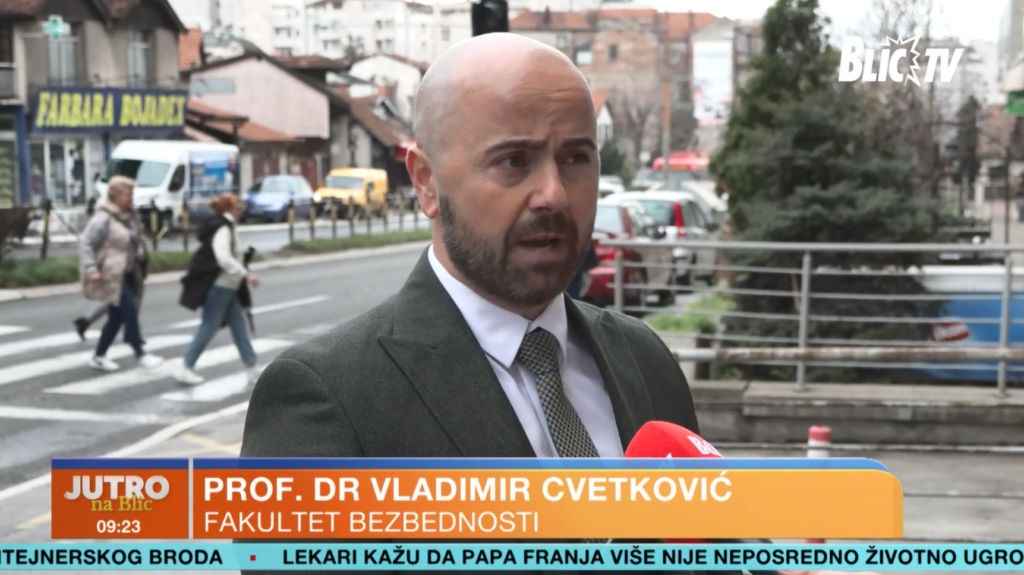
    Prof. Dr. Vladimir M. Cvetković – Disaster Risk Management
    Share. Facebook Twitter Pinterest LinkedIn Tumblr Telegram Email
    Previous ArticleReviewer Instructions for the International Journal of Disaster Risk Management (IJDRM) 
    Next Article International Journal of Disaster Risk Management
    Editor
    • Website

    Prof. Dr. Vladimir M. Cvetković is recognized as a leading expert in Disaster Risk Management, with a focus on Risk Reduction, Preparedness, Response, and Recovery. He has authored over 300 scientific papers published in domestic and international journals and proceedings, as well as 30 books.

    Related Posts

    Disaster Risk Management — Theory, Concepts and Methods

    March 8, 2026

    Univ. Prof. Dr. Vladimir M. Cvetković official website has been refreshed and content-updated

    March 5, 2026

    Support ProSafeNet: Help Us Build Faster, Safer, Stronger

    January 4, 2026
    Add A Comment
    Leave A Reply

    You must be logged in to post a comment.

    Scientific-Professional Society for Disaster Risk Management, Belgrade, Serbia.

    The Association “Scientific-Professional Society for Disaster Risk Management”  (www.spsdr.com) is a non-governmental and non-profit association, established for an indefinite period, for the purpose of achieving objectives related to the advancement of scientific and professional knowledge and practice in the field of disaster risk management, emergencies, security, protection and community resilience, through the implementation of quantitative and/or qualitative research, publishing activities (journals, books and other publications), organizing national and international events, conducting formal and non-formal forms of education and professional development, preparing expert analyses, risk assessments and planning documents, developing digital platforms and knowledge bases, as well as other activities in accordance with the law and this Statute.

    International Journal of Disaster Risk Management

    The International Journal of Disaster Risk Management (IJDRM) is a double-blind peer-reviewed, open-access international journal published twice a year, dedicated to advancing interdisciplinary research and practice in disaster and hazard studies, policy, and management. IJDRM publishes contributions across the full disaster risk management cycle—prevention, mitigation, preparedness, response, and recovery—covering natural hazards, technological/man-made hazards, complex emergencies, and global crises. www.ijdrm.com

    Scientific-Professional Society for Disaster Risk Management (SPS-DRM)

    Type above and press Enter to search. Press Esc to cancel.